
Thoracic Myelopathy | Stenosis Specialist
Thoracic myelopathy occurs when compression or injury of the spinal cord in the mid-back disrupts normal spinal cord function. Thoracic spinal stenosis (narrowing of the spinal canal)is one condition that can place pressure on the spinal cord and cause myelopathy. Symptoms can affect walking, balance, coordination, sensation, and leg strength. Dr. Andre Samuel evaluates thoracic myelopathy and spinal cord compression for patients in Clear Lake, Houston, and Sugar Land.

What is thoracic myelopathy?
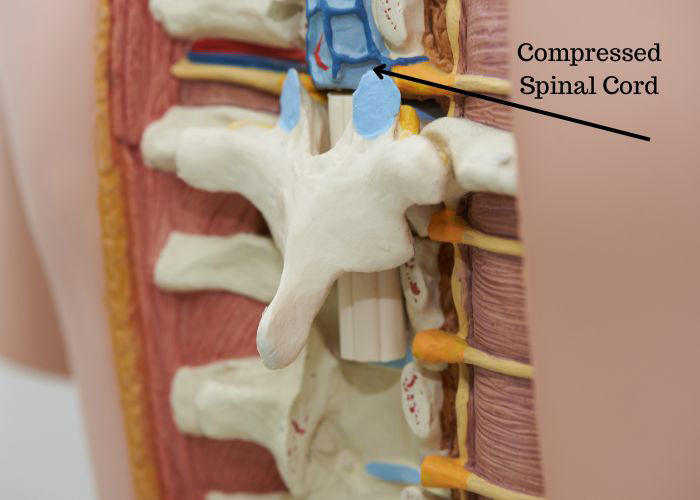
Myelopathy refers to dysfunction of the spinal cord. Thoracic myelopathy affects the spinal cord in the mid-back, or thoracic spine. But more specifically, thoracic spinal stenosis is the narrowing of the thoracic spinal canal. When that narrowing compresses the spinal cord and causes neurological dysfunction, thoracic myelopathy can develop.
The spine is composed of 33 bones stacked on top of each other that run from the cranial base (bottom of the skull) to the tailbone. These bones are known as vertebrae. But the spine is composed of more than just these vertebrae. Running down the center of each vertebra is a hollow space that houses the spinal cord. This space, known as the spinal canal, also contains 31 pairs of nerve roots communicating motor, sensory, and other impulses with the rest of the body.
The areas of the back are generally considered in four major areas: the cervical (neck), the thoracic (mid-back), the lumbar (low-back), and the sacral/coccygeal (tailbone) regions. Sometimes, the space in the spinal canal can be reduced in volume, causing a narrowing of the spine known as stenosis. When the spinal canal is compressed in the thoracic region, it can pressure the spinal cord or the nerves in the area that radiate a sharp pain to other parts of the body. This is called thoracic stenosis. Stenosis of the spine can result in a neurological condition known as myelopathy. Thoracic stenosis (also known as spinal cord compression or thoracic myelopathy) is a serious condition that can cause poor walking balance, problems with coordination, and bowel dysfunction. Dr. Andre M. Samuel, orthopedic spine specialist, treats patients in Clear Lake, Houston, Sugar Land, TX area who have symptoms associated with myelopathy or thoracic stenosis.
What causes thoracic myelopathy?
Myelopathy and spinal stenosis can happen to anyone and can occur in any region in the back. Although acute, traumatic events such as a sports injury, disc herniation, or a car accident can lead to this condition; thoracic stenosis is more often caused by the aging process. As we get older, the joints of our spine deteriorate, and the space between our vertebrae shrinks. Other degenerative factors, such as osteoarthritis and bone spurs, can also lead to this condition.
Thoracic stenosis can also be caused by congenital factors. People born with a narrower spinal canal, for example, or those with excessive bone growth, can be more susceptible to thoracic myelopathy. Thoracic stenosis can exist without myelopathy; myelopathy occurs when spinal cord function becomes impaired.
What are the symptoms of thoracic myelopathy?
- Difficulty walking, gait imbalance, poor coordination, or an unsteady feeling.
- Numbness, tingling, altered sensation, or weakness in the torso or legs.
- Leg weakness or heaviness that affects mobility.
- Back, rib-area, or radiating pain may occur depending on the source of compression, but myelopathy is primarily a neurologic condition.
- Progressive weakness, worsening walking/balance, or new bowel or bladder dysfunction should prompt timely medical evaluation.
How is thoracic myelopathy diagnosed?
Diagnosis combines the pattern and progression of symptoms with a physical and neurological examination evaluating strength, sensation, reflexes, coordination, and walking. MRI of the thoracic spine is commonly used to evaluate the location and severity of spinal cord compression and whether there are changes within the spinal cord. CT or CT myelography may provide additional information in selected patients.
How is thoracic myelopathy treated?
The treatment for thoracic myelopathy depends on the cause and severity of spinal cord compression, the presence and progression of neurological symptoms, examination findings, and imaging.
• When thoracic myelopathy is significant or progressing, surgical decompression may be recommended to relieve pressure on the spinal cord and reduce the risk of further neurologic decline. Depending on the anatomy and stability of the spine, treatment may include laminectomy or decompression with fusion
A variety of factors help determine the best course of treatment for patients diagnosed with thoracic stenosis or thoracic myelopathy. These treatments can be non-surgical or surgical.
Non-surgical treatment:
The aim of non-surgical treatments for patients is to relieve pain through the reduction of nerve inflammation and pressure. To achieve this, a specialist may recommend:
- NSAID’s, or non-steroidal anti-inflammatory drugs, to reduce pain or inflammation.
- Physical therapy to improve posture and strengthen the muscles of the thoracic area.
- Weight control techniques.
- Epidural spinal injections.
Please remember that medication, physical therapy, activity modification, and other nonsurgical measures may help selected symptoms, but they do not physically decompress a spinal cord that remains significantly compressed. Non-surgical methods are useful for pain control, but do not solve the problem.
Surgical treatment:
When thoracic myelopathy is significant or progressing, surgical decompression may be recommended to relieve pressure on the spinal cord and reduce the risk of further neurologic decline. Depending on the anatomy and stability of the spine, treatment may include:
- Llaminectomy, Dr. Samuel will remove a portion of the vertebrae bone called the lamina. This can relieve the pressure on the spinal canal by allowing for more room between the bones of the spine.
- Foraminotomy: A foraminotomy is a surgical procedure that enlarges space around nerve by creating a small window into the spinal canal. The goal of a foraminotomy is to relieve pressure on compressed nerves.
- Decompression and fusion. In cases where a significant amount of bone must be removed in order to relieve spinal cord compression, a fusion procedure may be required to prevent instability. In these cases the weakened area of bone is reinforced with metal screws and rods, and bone graft that will allow the weak bone to eventually fuse together creating mechanical stability in the spine.
Thoracic Myelopathy Progression and Recovery
Thoracic myelopathy can worsen over time if pressure on the spinal cord continues. How the condition progresses and how well a patient recovers depend on several factors. These factors may include the cause of the compression, how severe it is, how long it has been present, and the patient’s neurological function before treatment. Treatment may improve symptoms and function, but some neurological changes may not fully reverse, particularly if the spinal cord has been compressed for a long time. For this reason, an important goal of treatment is not only to improve function when possible, but also to prevent further spinal cord damage and neurological decline.
About the Author: Andre M. Samuel, MD


