
Cervical Stenosis and Myelopathy Specialist
Cervical myelopathy occurs when compression of the spinal cord in the neck disrupts normal spinal cord function. It may develop gradually as the cervical spinal canal narrows and can affect the hands, arms, balance, walking, and leg strength. Dr. Andre Samuel evaluates cervical myelopathy and cervical spinal cord compression for patients in Clear Lake, Houston, and Sugar Land, with treatment based on the severity of symptoms, neurological findings, and imaging.

What is cervical myelopathy?
Myelopathy refers to dysfunction of the spinal cord. Cervical myelopathy occurs when the spinal cord is compressed or otherwise affected in the neck. When age-related degeneration and cervical spinal stenosis cause the compression, the condition may be called cervical spondylotic myelopathy or degenerative cervical myelopathy.
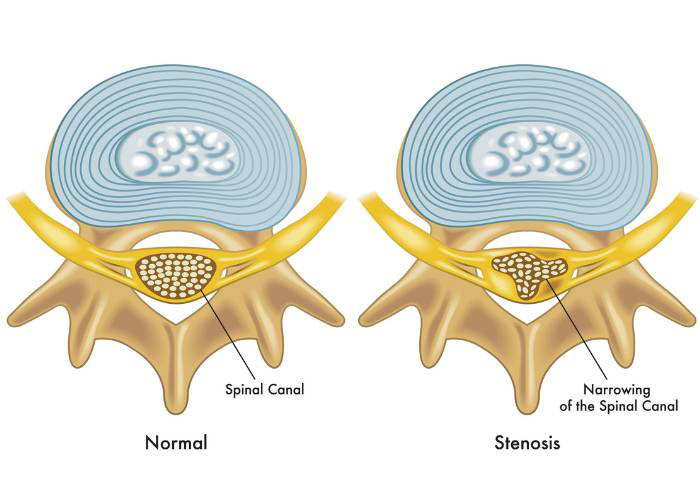
The spinal column begins at the base of the skull and houses the network of nerves and the spinal cord that carry electrical messages to all parts of the body. The first seven vertebrae of the spinal column form the cervical spine which makes up the neck. The bony openings of the vertebrae also the nerve controlling the arms to exit. These openings may narrow with the normal aging process causing pressure and irritation to these cervical spine nerve roots. Narrowing of the spinal canal itself is called spinal stenosis, which can result in compression of the spinal cord or the spinal nerve roots the control the arms. While adults over the age of 40 have a higher risk of developing cervical myelopathy or stenosis, a small number of individuals have a congenital variation where they are born with an already narrowed spinal canal.
What is cervical spondylotic myelopathy?
As individuals age, the spinal cord can become compressed which may cause a steady progression of symptoms. This neck condition is known as cervical spondylotic myelopathy (CSM). Individuals with this condition can experience a wide range of symptoms including severe neck pain and stiffness, numbness and/or tingling in the hands and fingers, loss of hand dexterity, difficulty with coordination or walking balance, and progressive weakness in the arms or legs. Dr. Andre M. Samuel, orthopedic spinal specialist serving Clear Lake, Houston, and Sugar Land, Texas area, has the knowledge and understanding, as well as substantial experience, in treating patients who have experienced cervical stenosis or cervical spondylotic myelopathy.
What causes cervical myelopathy?
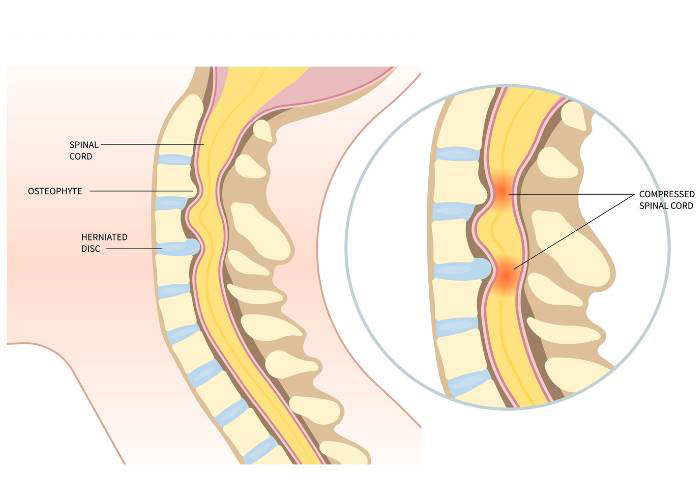
Cervical myelopathy occurs when the spinal cord in the neck becomes compressed and its function is affected. The most common causes are age-related cervical spondylosis, degenerative changes, and cervical spinal stenosis. Herniated discs, bone spurs (osteophytes), thickened or ossified ligaments, and other conditions can also narrow the spinal canal and place pressure on the spinal cord. It is important to note that cervical stenosis can exist without myelopathy. Myelopathy develops when the compression begins to interfere with normal spinal cord function.
What are the symptoms of cervical stenosis?
Because cervical stenosis slowly progresses with time, it is common for symptoms to also slowly progress with time. Some individuals may not experience any symptoms until the cervical spine becomes severely narrowed. It’s important to recognize the early signs or symptoms of cervical stenosis. Common symptoms of cervical stenosis include:
- Decreased sensation of the upper extremities
- Loss of upper or lower extremity muscle strength with progressive weakness
- Difficulty with walking balance and coordination skills
- Fine motor skills, such as handwriting, are also affected
- Hand clumsiness or loss of dexterity, including difficulty with handwriting, buttons, or handling small objects.
- Numbness or tingling in the hands or arms.
- Balance problems, unsteady walking, gait changes, or difficulty with coordination
- Neck pain may occur, but myelopathy is primarily a spinal cord/neurologic condition and significant neurologic symptoms can occur even when pain is not the dominant complaint.
How is cervical myelopathy diagnosed?
A medical history will be obtained by Dr. Samuel followed by a physical and neurological examination. Diagnosis combines the pattern and progression of symptoms with a physical and neurological examination assessing strength, sensation, reflexes, coordination, hand function, and gait. MRI of the cervical spine is commonly used to evaluate spinal cord compression, the degree of canal narrowing, and changes within the spinal cord. CT may provide additional information about bone anatomy when needed.
How is cervical myelopathy treated?
The treatment for cervical myelopathy or stenosis depends on the severity and progression of neurologic symptoms, examination findings, the degree and location of spinal cord compression, and MRI findings.
Non-surgical treatment:
Physical therapy, activity modification, medication, and observation may have a role in selected patients, but these approaches do not physically decompress a spinal cord that remains significantly compressed. Non-steroidal anti-inflammatory medications (NSAIDs) decrease inflammation and alleviate muscle pain. An epidural steroid injection can be administered near the affected nerve root to further relieve symptoms of pain and inflammation. However, in cases of severe spinal cord compression, Dr. Samuel will often recommend early surgical treatment, in order to avoid permanent spinal cord damage and prevent ongoing loss of function.
Surgical treatment for myelopathy:
Surgery may be recommended when there is significant or progressive myelopathy to decompress the spinal cord and reduce the risk of further neurologic decline. The specific approach depends on the location and extent of compression, spinal alignment, and other patient factors. With the recent advancements in surgical technology, there are several techniques that Dr. Samuel can perform to correct cervical stenosis. Individuals with continued and worsening symptoms despite conservative management are good surgical candidates. Dr. Samuel may recommend one or more of the following myelopathy treatments:
- Cervical Disc Replacement (CDR): The herniated disc is completely removed from an incision on the front of the neck and replaced with an artificial disc that preserves motion. Can be used to treat one to two levels of stenosis
- Anterior Cervical Discectomy & Fusion (ACDF). The ruptured disc is completely removed from an incision on the front of the neck. The space is then filled with a bone graft that will fuse to the surrounding vertebrae. This is used for treating discs that have also become severely arthritic.
- Posterior Cervical Laminoplasty: This is a motion-preserving technique where the spinal canal in enlarged through an incision in the back of the neck. By preserving at the spinal facet joints and disc, no fusion or loss of neck motion is necessary.
Cervical Myelopathy Recovery and Prognosis:
Cervical myelopathy can progress gradually, and changes may be subtle at first. However, if you have worsening hand function, balance problems, changes in walking or gait, or increasing weakness you should contact Dr. Samuel right away for further evaluation. Recovery varies from person to person and depends on factors such as the severity and duration of spinal cord compression, neurologic function before treatment, the underlying cause, the treatment performed, and overall health. While treatment may improve function in some patients, neurologic deficits do not always fully reverse. In many cases, an important goal of treatment is to relieve pressure on the spinal cord and help prevent additional spinal cord injury or further neurologic decline.


