
C1-C2 Neck Fracture Specialist in Clear Lake, Houston, Sugarland TX
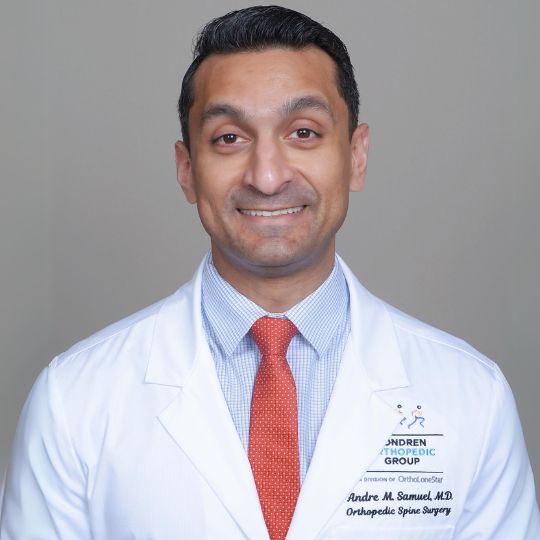
Neck instability (atlantoaxial instability) is characterized by excessive movement between the two top cervical vertebrae: C1 and C2. Traumatic injuries and fractures involving C1 or C2 can result in instability, pain, and neurological symptoms such as numbness or tingling in the extremities. Doctor Andre M. Samuel, orthopedic spine specialist, treats patients in Clear Lake, Houston, Sugar Land, TX area with C1 and C2 fractures and traumatic injuries that result in atlantoaxial instability.
*This page focuses on traumatic C1-C2 injuries and fractures. Patients with chronic or non-traumatic atlantoaxial instability without a fracture or traumatic cervical spine injury may require evaluation by a different type of specialist.
What is atlantoaxial instability?
There are 33 vertebrae (bones) of the spine that are generally divided into three main sections: the lumbar (lower), thoracic (middle), and cervical (neck) regions. There are seven vertebrae of the cervical spine that are identified by their letter C (cervical) and a corresponding number. C1 is at the base of the skull while C7 is near the bottom of the neck.
Sitting at the top of the cervical spine, C1 (atlas) and C2 (axis) form the atlantoaxial joint, a crucial part of the body that is primarily responsible for the left and right rotation of the neck and head. In a healthy spine, the joint at C1-C2 allows for as much movement as possible while still providing structural support. Sometimes, however, there is excessive movement at the base of the skull between C1 and C2.
When this happens, it is known as atlantoaxial instability, which can lead to misalignment and compression of the spinal cord. C1 and C2 fractures and other traumatic injuries can damage the structures that normally stabilize this joint, resulting in traumatic atlantoaxial instability. Doctor Andre M. Samuel, orthopedic spine surgeon, evaluates and treats C1-C2 fractures and associated traumatic instability in patients in the Clear Lake, Houston, Sugar Land, TX area.

What causes C1-C2 fractures and traumatic atlantoaxial instability?
In adults, atlantoaxial instability can result from an acute or traumatic event, including a transverse ligament injury or a fracture involving C1 or C2. Trauma to the upper cervical spine can affect the bones, joints and ligaments responsible for maintaining stability between C1 and C2.
Other medical, degenerative or congenital conditions can also cause atlantoaxial instability. However, Dr. Samuel’s treatment focus described on this page is C1-C2 fractures and traumatic cervical spine injuries that result in instability.
What are the symptoms of a C1-C2 fracture or traumatic instability?
There are a variety of symptoms that could indicate the presence of a C1-C2 fracture or traumatic atlantoaxial instability. Symptoms may include neck pain, limited ability to move the neck, numbness, tingling, weakness, difficulty walking or other neurological symptoms.
Because injuries involving the upper cervical spine can be serious, patients who have sustained significant neck trauma or have been diagnosed with a C1 or C2 fracture should be appropriately evaluated to determine the extent of the injury and whether the cervical spine is stable.
.
How are C1-C2 fractures and traumatic instability diagnosed?
To diagnose a C1-C2 fracture or associated instability, Dr. Samuel will carefully review your medical history, perform a physical examination, and review or order appropriate diagnostic imaging. X-rays, CT scans and/or MRI may be used to evaluate the bones, ligaments, spinal cord and stability of the upper cervical spine.
Dr. Samuel will determine the type and severity of the injury and whether instability is present to help determine the appropriate course of treatment.
What is the treatment for C1-C2 fractures and traumatic neck instability?
Non-surgical treatment:
Depending on the severity of the fracture, the stability of the cervical spine, and the patient’s symptoms, Dr. Samuel may suggest non-surgical treatment. Treatment may include immobilization with a cervical orthosis or other appropriate conservative care while the fracture heals.
Surgical treatment:
In severe cases, or when more conservative measures are not deemed adequate surgical stabilization and fusion may be necessary to treat an unstable C1-C2 injury.
C1-C2 cervical fusion stabilizes the C1 and C2 vertebrae using instrumentation and bone graft to allow the bones to heal in a stable position. The appropriate surgical approach depends on the fracture pattern, degree of instability and other characteristics of the individual injury.
Who Should See Dr. Samuel for a C1-C2 Injury?
Dr. Samuel evaluates adults with traumatic injuries of the cervical spine, including C1 and C2 fractures, unstable fractures, fracture-related atlantoaxial instability and injuries that may require surgical stabilization.
If you have been diagnosed with atlantoaxial instability but have not sustained a C1-C2 fracture or traumatic cervical spine injury, please contact the office before scheduling so the team can determine whether Dr. Samuel is the appropriate specialist for your condition.
Schedule an Appointment with Dr. Samuel
If you have sustained a C1 or C2 fracture or have been diagnosed with traumatic atlantoaxial instability associated with a cervical spine injury, schedule an evaluation with Dr. Samuel to discuss your diagnosis and appropriate treatment options.
About the Author: Andre M. Samuel, MD


